
Strengthening Emergency Care and the ROK–U.S. Alliance Through Voluntary Service
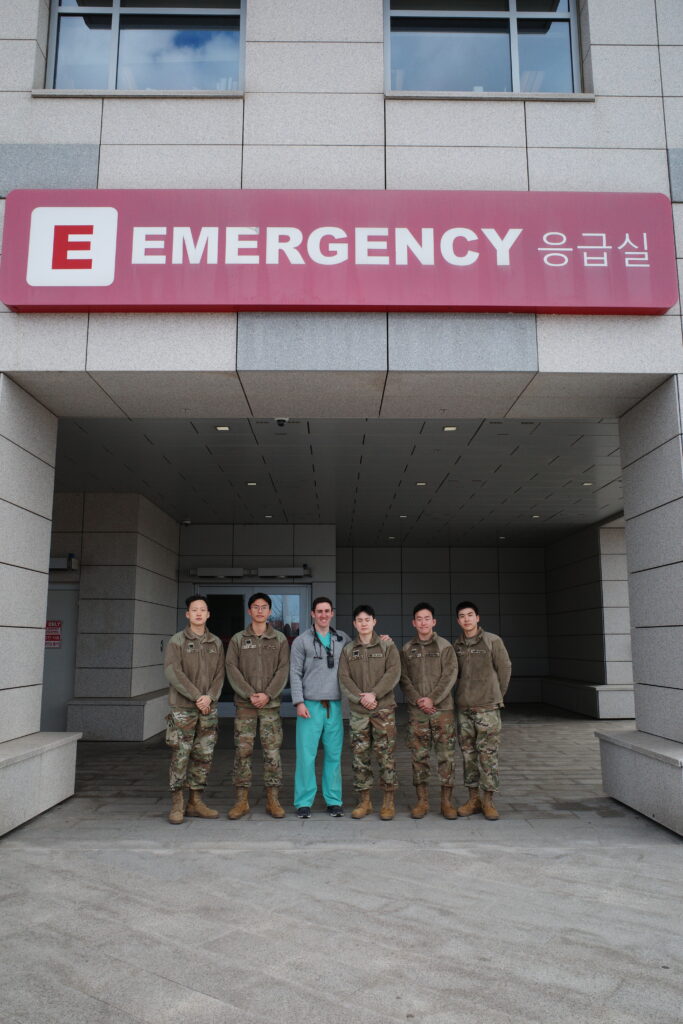
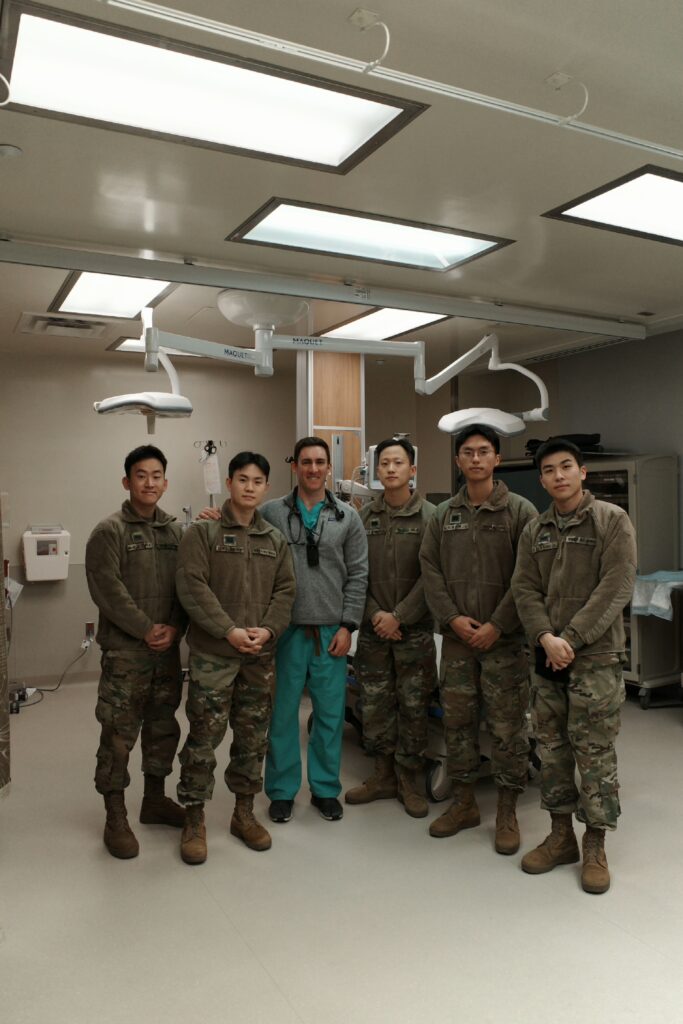
Every second matters in the fast-paced environment of the Emergency Department (ED) at Brian D. Allgood Army Community Hospital (BDAACH) of CAMP HUMPHREYS, Republic of Korea. Patient safety, continuity of care, and cross-system coordination are not abstract concepts — they are operational necessities.
In Summer 2025, NEXT-A Founders and NEXT-A Management Leaders helped initiate and support a physician shadowing and volunteer effort at BDAACH. Through this initiative, NEXT-A member CPL Shin Hongmin became the first KATUSA physician to formally participate in a structured shadowing and continuity-of-care support program within the Emergency Department.
This effort demonstrated how professional expertise within the KATUSA force can meaningfully contribute to alliance readiness.
Identifying a Real Operational Gap
Because BDAACH does not provide certain high-complexity surgical services, critically ill patients are frequently transferred to Korean university hospitals.
These transfers often lead practical challenges:
- Language differences
- Different electronic medical systems
- Limited feedback loops after transfer
- Difficulty ensuring follow-up care coordination
Recognizing this gap, Dr. David A. Watson, Chief of Emergency Medicine, authorized and sponsored CPL Shin’s voluntary participation in a structured capacity appropriate to his credentials and KATUSA role.
CPL Shin is a licensed physician in the Republic of Korea and has passed the United States Medical Licensing Examination. His bilingual proficiency and understanding of both medical systems positioned him uniquely to support communication between U.S. Army providers and Korean receiving hospitals.
From Individual Effort to System Improvement
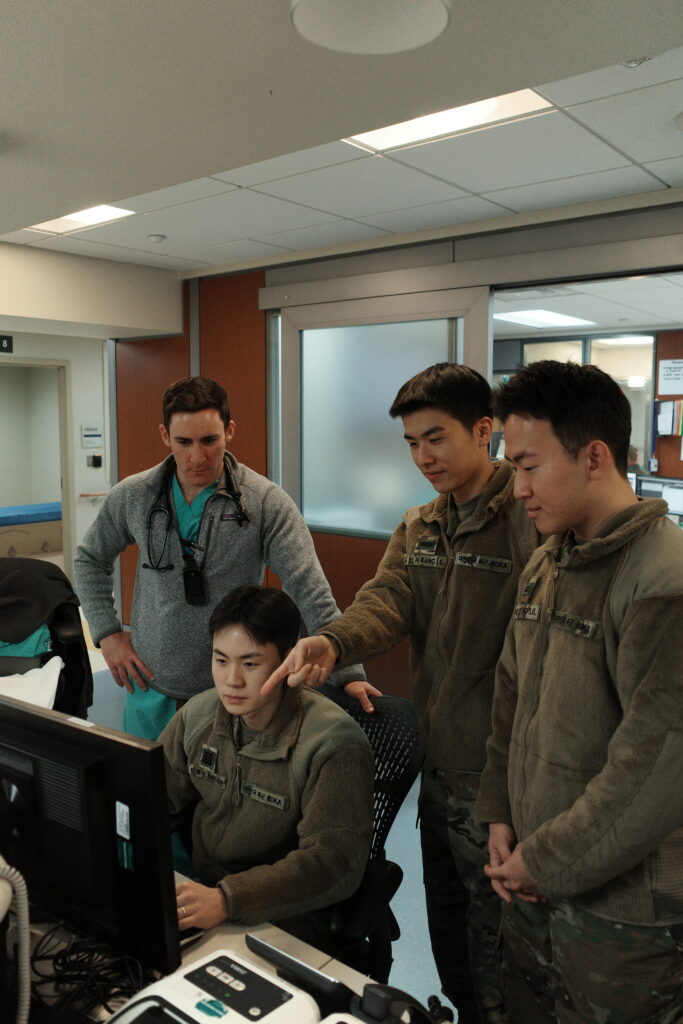
Rather than limiting his contribution to real-time transfer coordination, CPL Shin conducted a structured review of transfer cases.
He:
- Contacted over 200 transferred patients
- Verified treatments received at Korean hospitals
- Assessed whether follow-up care was reconnected at BDAACH or unit level
- Identified systemic breakdowns in feedback and continuity
Recognizing the need for sustainability, he developed:
- A standardized callback script
- A transfer tracking chart usable by non-medical personnel
- A documentation workflow to improve long-term continuity
This initiative was later briefed to the U.S. Forces Korea Surgeon as a ground-level innovation improving readiness and alliance coordination.
Professional Development Through Service
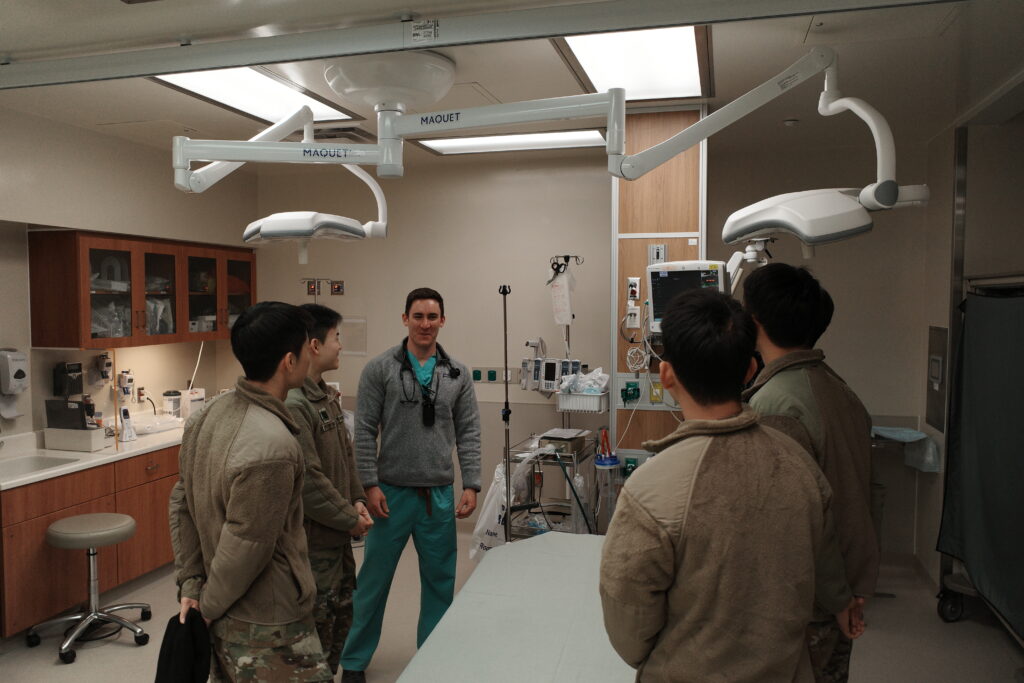
During his volunteer period, CPL Shin also shadowed emergency physicians, participated in case discussions, and observed mass casualty training exercises.
Importantly, this was not about expanding scope of practice – it was about learning, observation, and system support.
The program demonstrated how medically credentialed KATUSAs can ethically and appropriately contribute to U.S. Army Medicine while maintaining regulatory boundaries.
A Cultural Shift Within the Alliance
Although the initial full-time volunteer period concluded after one month, CPL Shin continued returning weekly to support follow-up tracking.
More significantly, his participation created precedent.
Following this initiative, additional KATUSA Soldiers with medical credentials expressed interest in supporting BDAACH in structured, authorized capacities.
This is precisely the type of leadership culture NEXT-A seeks to cultivate:
- Leave sustainable impact
- Identify gaps
- Leverage professional expertise
- Strengthen alliance systems
Why This Matters
It demonstrated that:
This initiative was not simply about one Soldier volunteering.
- The KATUSA force includes highly trained professionals with global-level credentials
- Structured collaboration strengthens operational medicine
- Grassroots innovation improves alliance readiness
- Leadership can begin at the NCO level
As NEXT-A continues to build a Network for eXceptional Talent within the Alliance framework, initiatives like this serve as proof of concept.
Service, when aligned with expertise and vision, becomes institutional impact.